
Homer
by Homer
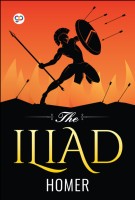
The Iliad of Homer, sometimes referred to as the Song of Ilion or Song of Ilium, is an ancient Greek epic poem in dactylic hexameter, traditionally attributed to Homer. Set during the Trojan War, the ten-year siege of the city of Troy (Ilium) by a coalition of Greek states, it tells of the battles and events during the weeks of a quarrel between King Agamemnon and the warrior Achilles. Although the story covers only a few weeks in the final year of the war, the Iliad mentions or alludes to many of the Greek legends about the siege; the earlier events, such as the gathering of warriors for the siege, the cause of the war, and related concerns tend to appear near the beginning. Then the epic narrative takes up events prophesied for the future, such as Achilles' imminent death and the fall of Troy, although the narrative ends before these events take place. However, as these events are prefigured and alluded to more and more vividly, when it reaches an end, the poem has told a more or less complete tale of the war.
The works of Homer were more than entertainment for the ancient Greeks. They were nearly scripture. Oddysseus was the Archetypal Homeric ideal, the great example of what a man should be, and how he should live his life. Clever, smart, brave, strong, disciplined, loyal to his family and his country and willing to sacrifice all if required (and only if required) he embodied all the ideals a Greek was supposed to live up to. In fact, it was for repeatedly telling the youth of Athens that their parents were not living up to the Homeric Ideal that Socrates was condemed to death.
The free Quailsong version was translated by the Earl of Derby in blank verse and is considered faithful to the original and non-interpretive, however the language is victorian which can be a plus or a minus depending on your point of view.
The rest of the versions offered were translated by Richmond Lattimore. His translation is considered the gold standard in faithful, non-interpretive contemporary english translations.
The Odyssey recounts Odysseus’ journey home after the Trojan War—and the obstacles he faces along the way to reclaim his throne, kingdom, and family in Ithaca.
During his absence, his steadfast and clever wife, Penelope, and now teenaged son, Telemachus, have lived under the constant threat of ruthless suitors, all desperate to court Penelope and claim the throne. As the suitors plot Telemachus’ murder, the gods debate Odysseus’ fate. With help from the goddess Athena, the scattered family bides their time as Odysseus battles his way through storm and shipwreck, the cave of the Cyclops, the isle of witch-goddess Circe, the deadly Sirens’ song, a trek through the Underworld, and the omnipresent wrath of the scorned god Poseidon.
The works of Homer were more than entertainment for the ancient Greeks. They were nearly scripture. Oddysseus was the Archetypal Homeric ideal, the great example of what a man should be, and how he should live his life. Clever, smart, brave, strong, disciplined, loyal to his family and his country and willing to sacrifice all if required (and only if required) he embodied all the ideals a Greek was supposed to live up to. In fact, it was for repeatedly telling the youth of Athens that their parents were not living up to the Homeric Ideal that Socrates was condemed to death.
The free Quailsong version was translated by William Cowper in Miltonic blank verse and is considered faithful to the original and non-interpretive, however the language is from the Georgian era which can be a plus or a minus depending on your point of view.
The rest of the versions offered were translated by Richmond Lattimore. His translation is considered the gold standard in faithful, non-interpretive contemporary english translations.